The First Step Is Listening
.jpg)
Before any home is repaired, before a single load of water is delivered, and before a community receives the help it urgently needs, humanitarian work begins with something simple but powerful: listening.
With support from the Ukraine Humanitarian Fund (UHF), Medair began the first stage of a new project that will assist 4,870 people across several conflict-affected settlements in Kharkiv Oblast. The baseline survey is part of this larger effort, which will strengthen access to safe water, primary healthcare, and essential household support for vulnerable residents, including older people, people with chronic illnesses, and families with limited income.
A village carrying years of silent problems
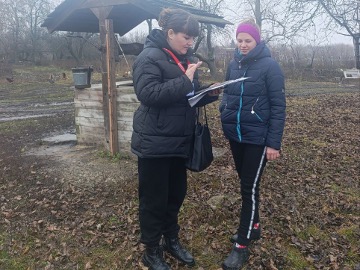
The village our team visited for this survey is small, home to just 95 people since the war started, most of them older, many living with chronic illness. It was occupied in 2022. Although many houses survived structurally, what followed was years of worsening neglect: the water supply system broke down, the main well no longer provides enough water for everyone, and the roads have deteriorated so badly that public transport no longer reaches the village.
To travel to the nearest city, residents must pay 1000 UAH for a return taxi which is nearly a quarter of a monthly pension. Medication is difficult to access, a mobile pharmacy comes only once a month, and the absence of transport means that even basic medical visits in nearby towns are often impossible.
Why a baseline survey matters
For Medair’s staff, the visit was important and eye-opening. “I was very struck that people here have been without water for more than six years,” said Nataliia, Medair’s MEAL Officer. “They cannot take full showers or use their washing machines. Listening to people helps us understand their problems in detail so we can provide the right types of assistance.”
Initial conversations revealed problems no report alone could have captured: elderly residents cycling long distances on damaged roads with heavy water bottles; families washing laundry in basins because their wells do not produce enough water to use a washing machine; neighbours relying on soldiers to buy medicines in distant towns.
This is exactly why the baseline survey is so important. It ensures that the UHF-funded project is built not on assumptions, but on the real needs people share openly when someone finally asks.
Being heard after years of silence
For many residents, this was the first time humanitarian organisations had come to ask about their experiences.
“No one asked us such questions before,” said Tetyana, a young mother. “We are grateful that you heard our problem and plan to help us.”
Another woman, Elena, explained: “Our village has been without water for years. Before the occupation, there were so many people here. A kindergarten, a school, even a canteen. Now there is nothing. It was pleasing to answer the questions. We live here, but nothing is here.”
Yet despite hardship, hope emerged during the conversations. The community dreams of water flowing in the taps again and hopes for enough water so they can wash, clean, and live normally.
A foundation for the entire project
The baseline survey is much more than data collection. It is the first moment the project becomes real for the community. It builds trust, reveals priorities, and ensures that limited resources are directed to where they will have the greatest impact.
Nataliia shared:
“The community will be very grateful when they gain access to enough water after the project is implemented. They will finally be able to use the shower and the washing machine again.”
For this small frontline village the survey marks the first step toward solutions: rehabilitating water infrastructure, improving access to medical care, and reducing the daily burden on elderly and displaced residents.
Listening is already making a difference
Although the project in this village in Kharkiv Oblast is only beginning, the impact of simply listening is clear. People felt seen, valued, and hopeful for the first time in a long time.
Nataliia summarised it well:
“My hope is to be an effective assistant for the community and a source of information for them.”
With UHF support, that hope is now shared by an entire village. A community that has waited years for someone to ask the right questions so change can finally begin.
.png)
.png)
.webp)