Emergency Response: Programs and operations; sectors, staff and systems
.webp)
An introduction
Damon: Welcome back reader to this fireside conversation looking at key considerations in setting up a humanitarian response. In our first article Becks and I laid the groundwork for understanding what it takes to mount an effective humanitarian emergency response. We explored the first three of eight core considerations—Security, Speed, and Space—each vital to the early stages of crisis intervention.
We began with Security, discussing how robust emergency preparedness, risk mitigation, and crisis management are essential to protect both responders and affected populations. Then came Speed, where we emphasized the critical importance of rapid mobilization and timely action—because in emergencies, every minute truly matters.
Our third focus was Space, which brought us into the realm of logistics: how we manage operational zones, allocate resources, and coordinate movement in often chaotic environments.
These three elements form the backbone of any initial response effort. In this second article, we will continue the conversation by turning our attention to the next trio of considerations: Staff, Systems and Simplicity, and Sustainability—each shaping how we build, run, and sustain our response efforts beyond the first wave.
Becks: The aid sector was hard-hit by the decision to shut down USAID, which had an annual budget of about $44 billion. On 23 February 2025, all USAID direct-hire personnel globally were placed on administrative leave. The implications were devastating for millions of people globally who relied on foreign aid support from the US Government, which funded projects implemented by the UN and INGOs.
Medair was one of the INGOs impacted, seeing their budget cut by approximately 30%, in line with the broader USAID contract terminations. This led to a reduction of funding to every country programme Medair works in. Additionally, over 600 staff globally lost their jobs due to the funding cuts.
Medair came together in prayer, seeking God on the decisions the senior leadership team had to make. Despite the heartache and difficult period this was, it became a time of unity for the wider Medair family.
Damon: Thanks, Becks. The USAID shutdown was a stark reminder of how vulnerable the aid sector can be to external shocks. And while the impact on Medair was significant, it also brings us to the heart of today’s conversation—how we build and sustain humanitarian responses beyond the initial wave.
Let’s shift gears and look at the next three components in our framework: Staff, Systems and Simplicity, and Sustainability. These are less about the immediate scramble and more about what it takes to keep a response going with integrity, efficiency, and long-term vision.
Becks: Thank you Damon for narrowing a very big conversation into three clear points. Happy to know we’re not going to be discussing politics here.
Damon: In my own experience, speed is often the most unforgiving pressure in an emergency response. The urgency to act quickly can clash with the time needed to recruit the right staff, build simple yet effective systems, and design programmes that are truly sustainable. Balancing these priorities is never straightforward—and the tension between doing things fast and doing them well is one of the core dilemmas we face in the field. Let’s kick-off with sectors.
Sectors
Becks: You know, Damon, when we say ‘multi-sectoral,’ we don’t mean a bunch of disconnected teams doing their own thing. It’s more like a symphony—different instruments, one score. All working together to achieve the same outcome or main objective.
Damon: Exactly. At Medair, our sectoral response is deeply integrated. Health, WASH, shelter, nutrition—they’re not silos, they’re strands in the same lifeline. And the goal is always the same: saving lives, restoring dignity, and doing it with speed and precision.
Our delivery model starts with in-country technical staff, usually locally recruited. These are the people who know the terrain, the culture, and the community dynamics. They’re the ones who can tell you which water source is safe, or what the problems are with it, which clinic is trusted, and which supplier actually delivers what they promise.
Supporting them is our global QAC team—Quality Assurance and Compliance. These advisors don’t just set standards; they help local teams meet them. They provide tools, training, and troubleshooting, ensuring that our programs are not only fast and responsive but also accountable and high-quality.
Becks: It’s like having a compass and a map. The local teams know where they are, and the QAC team helps make sure they’re heading in the right direction in the right way. There is always a methodology behind the projects and how we are trying to make them a reality.
Damon: Turkiye was a textbook example. After the earthquake, our shelter and WASH teams worked hand-in-hand. Local engineers designed safe, culturally appropriate shelters, while our WASH officers ensured sanitation facilities were integrated from day one. The QAC team helped refine technical specs and procurement processes, making sure everything met both global standards and local needs.
This kind of sectoral synergy is what makes Medair’s response model so effective. It’s not just about delivering services—it’s about delivering coordinated, high quality, life-saving impact. And when it works, it’s like a well-built fire: every log placed just right, burning clean and bright.
The local staff are the real heroes for Medair. They are making our projects happen - they know the culture, language and have the relationships and technical skills to make everything happen far faster and more efficiently than I would. We are just there to make sure procedures are followed and targets are met.
Becks: In Yemen, our Health and WASH staff worked hand-in-hand to find Health Facilities (HFs) which needed support. They spoke to the Ministry of Health, and provided senior staff with a potential list of HFs, and their specific needs. For example, they would need furniture, a dispensing pharmacy, medicines, solar panels for a fridge, toilets, hand basins, soap and a rainwater tank. Each of the proposed HFs would be ranked based on need and health and nutrition statistics in the catchment area. Together, the WASH and Health teams worked together to agree on what would be implemented at each HF, and in what time scale.
Designs and bills of quantities would be drawn up, and approved by the Project Manager and WASH Advisor to ensure best practice was followed and key standards were met. Similarly, the Health team worked with their PM and Advisor to ensure the right health and nutrition services and training would be provided to the HF staff and surrounding population.
The Logistics team was critical to the success of the HF upgrades. Whether it was contractors carrying out the rehabilitation work, or the supplier providing the medicines, or the provision of training materials from local printing shops.
The project was a huge success, with six HFs being refurbished to operate across all health and nutrition services, with WASH provision to enable the necessary functioning of water supply, sanitation and hygiene measures.
Staff
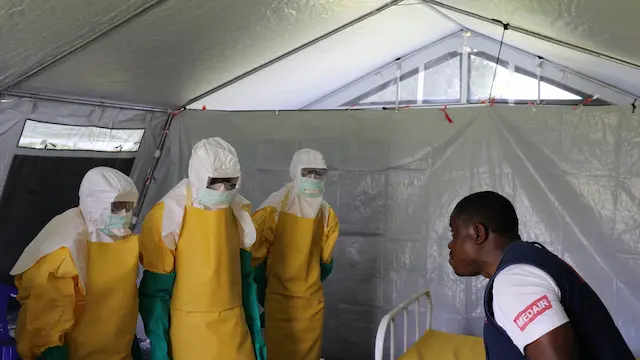
Becks: When people think of emergency response, they picture trucks, tents, and tarps. But really—it’s the people who make it all work. Without our people, we would not have any of our projects.
Damon: Absolutely. You can have all the gear in the world, but without the right team, it’s just a well-stocked warehouse.
In the humanitarian world, staff roles often sound deceptively simple—or wildly cryptic. Take the private sector: you’ve got your Project Managers, Operations Leads, HR Business Partners. Clear, structured, and often standardized across industries.
Now step into the NGO world, and suddenly you're recruiting for a PFM (Project Finance Manager), a PSM (Project Support Manager), or a PSO (Project Support Officer). These Medair-specific roles are the unsung heroes of field operations—handling everything from finance and logistics to compliance and coordination. And yes, they’re often the hardest to recruit. Why? Because they require a rare blend of technical skill, cross-cultural sensitivity, and the ability to thrive in high-stress, low-resource environments. Basically, unicorns with spreadsheets.
Becks: A key to the continuity of our projects is handing over well to the next Project Manager or Project Coordinator or Team Leader. We’re passing the torch—but the torch is on fire, the runner’s exhausted, and the next leg starts in five minutes. Leaving a country programme and handing over is never easy, but it’s crucial. Never has the phrase, “No man is an Island” been more true. It keeps us humble. Someone else is going to continue on the work that was started.
Damon: Exactly. A good handover isn’t just a briefing—it’s a lifeline. It’s how we ensure continuity, avoid reinventing the wheel, and keep the mission moving forward.
Whether it’s onboarding new staff, transitioning leadership, or rotating field teams, the human element is what keeps the response alive. And just like tending a fire, it takes care, attention, and a few sparks of brilliance to keep it burning.
Becks: I have another story to share from Al Dhale’e in the south of Yemen - sorry, I have many. I was recruiting for a WASH Officer. I decided on Sadam - he had been an Assistant at another INGO. He had a great attitude, and did well in the technical test. He was very dedicated to serving the people of Yemen. He continued to go from strength to strength as he was given more responsibility. In the last two years, he was promoted to WASH Manager. To me, this is one of the best outcomes of Medair’s work. Investing time and energy into our staff is one of the most important things we can do. They will stay in their countries and know the language, culture and people far better than i ever will. They will move things faster, and if trained well, better than I can or could.
You know what really warms my heart? Seeing our national colleagues rise through the ranks. It’s like seeing a spark catch and turn into a full blaze.
Damon: Totally. I’ll never forget one colleague in Ukraine. He joined us as a Logistics Officer—quiet, curious, sharp. In his first two weeks, he read our entire 85-page procurement guideline. Not skimmed. Read. And more impressively—he understood it.
Becks: That’s commitment. Most of us just search for the word ‘threshold’, or read the introduction and conclusion, and hope for the best.
Damon: Exactly! Within six months, he was promoted to Logistics Manager. By the end of the year, he was our Program Support Manager—part of senior leadership. It wasn’t just his technical ability. It was his alignment with our values, his initiative, and his ability to lead with integrity.
Stories like this are reminders of why localisation matters. Identifying high-capacity national staff early, investing in their growth, and promoting them into leadership isn’t just good practice—it’s essential. These individuals bring deep contextual knowledge, cultural fluency, and long-term commitment that expatriate staff often can’t match.
Becks: And when they step into those leadership roles, it’s like passing the torch to someone who’s already been tending the fire. They know the terrain, they know the team, and they know what it takes to keep the flame alive.
Damon: It’s one of the greatest joys in this work. Watching someone go from ‘new recruit’ to ‘trusted leader’—it’s like watching a fire grow from kindling to a steady, warming blaze.
So when we talk about Staff, we’re not just talking about recruitment. We’re talking about recognition, investment, and empowerment. Because the future of humanitarian response isn’t flown in—it’s already there, waiting to be ignited.
Systems and simplicity
Becks: You ever try to light a fire with damp wood and no kindling? That’s what setting up systems in an emergency feels like.
Damon: Especially when you’ve got three staff, one laptop, and a finance guideline that’s still in draft.
In humanitarian response, systems—finance, logistics, HR—are the unsung heroes. They’re not flashy, but they’re absolutely essential. Without them, procurement stalls, staff don’t get paid, and trucks don’t move. And yet, setting up these systems in a new emergency is like building a fireplace while the house is already cold.
Finance systems need to be secure, transparent, and fast. Logistics systems must track everything from warehouse stock to fuel receipts. HR systems have to onboard staff, manage contracts, and ensure compliance—all while the team is growing by the day.
Becks: And then there’s the waivers. Oh, the waivers. I didn’t really fully comprehend why we needed waivers when i first started in the role. I soon learnt that they are a necessity!
Damon: Ukraine was a classic case. We needed supplies fast, but our usual procurement process couldn’t keep up. So we had to issue waivers—carefully, transparently, and with solid justification. It’s a balancing act: speed vs. accountability.”
Becks: Same in Ethiopia. We had to set up a full logistics chain in a remote area with no internet and one reliable supplier. It was incredibly difficult. Simplicity became survival.
That’s where the second half of this equation comes in: simplicity. In emergencies, complexity kills. The best systems are those that are streamlined, intuitive, and scalable. They don’t require a PhD to operate—they just work, and can be followed.
Damon: If the system can’t be explained around a campfire, it’s probably too complicated.
Becks: And if it can be explained with a stick in the dirt, even better.
So when we talk about Systems and Simplicity, we’re talking about building the scaffolding that holds the whole response together. It’s not glamorous, but it’s what keeps everything from turning into a chaotic mess—and lets the team focus on what really matters: helping people. It simply takes a bit of time to explain the process and procedures, and how to follow them. Inductions with staff are key here.
Wrapping up
Becks: Talking through all this with you, Damon—it reminds me that emergency response isn’t just about rushing in and doing something to tick the box. It’s about building something that lasts and can be built upon. We don’t always have to go big from the outset.
Damon: Exactly. Staff, systems, sustainability—they’re the slow burn behind the initial spark. They’re what keep the response alive long after the headlines fade.
We’ve talked about the joy of seeing national staff rise into leadership, the challenge of building systems from scratch, and the quiet power of simplicity. These aren’t just operational details—they’re the soul of the response. They’re what turn chaos into coordination, and urgency into impact.
Becks: And it’s not just about what we build—it’s about who we build it with and how we build it. When local staff lead, when systems support instead of confusion, and when sustainability is foundational from day one… that’s when the fire really catches.
Damon: And stays lit.
As we wrap up this second fireside conversation, we’re reminded that humanitarian response is more than logistics and guidelines—it’s people, purpose, and persistence. It’s about showing up, staying present, and passing the torch with care.
Stay tuned for our final article, where we’ll explore the last two pillars: Sustainability and Succession. Because even in emergencies, the future matters.
.webp)