Bringing free healthcare to remote Madagascar

Meet Gisèle, a midwife on the front line in rural Madagascar
Gisèle is 29 years old, and she’s been a midwife and the nutrition officer at a government primary care facility (CSB) in Bevaho, Madagascar for five years. Married and a mother of one child, she supports women and children in one of the most remote rural communities in southeastern Madagascar every day.
In this isolated region, where villages are separated by long distances and rough roads, access to healthcare can mean the difference between life and death.
For a long time, working at the CSB was a real challenge for her.
“One of the biggest challenges was patient evacuations. Bevaho is far from the nearest hospital, and transport is difficult and expensive. When a woman needed surgery, she often didn’t have the means to pay for transport. Some even told us, ‘Let me die here, I don’t have the money to go to the hospital.’”
For Gisèle, hearing those words was devastating, knowing that treatment existed but was simply out of reach.
The care of malnourished children was also limited. The CSB could only treat moderate cases, and children with severe malnutrition had to be referred to the CRENI in Midongy – a specialised inpatient nutrition centre several hours away – a journey often impossible for already very poor families.
“Parents didn’t have enough to eat or to travel. Yet the child was weak, underweight, and in urgent need of care.”
There was also a serious lack of equipment and medicines. Families had to buy treatments themselves, which many could not afford.
“Some people didn’t even come to the CSB because they couldn’t pay. There were deaths that we couldn’t prevent.”
The health centre staff were doing everything they could, but without resources, their hands were tied.
Today, the situation has changed.
Through the “Tanan-kavana ho an’ny Fahasalamana” (TKF) project, implemented by Medair, the CSB in Bevaho now receives lifesaving care.
.webp)
“For childbirth complications, we transfer women to Vangaindrano, the nearest district hospital, and Medair covers the transport, the procedure, and even the costs for accompanying family members.”
What once felt impossible is now routine. Women who would have stayed home can now reach surgery in time.
“The issue of severely malnourished children has also been resolved: those referred to the CRENI in Midongy now receive care without their families having to bear the financial burden.”
The CSB has also received essential equipment: delivery tables and kits, neonatal resuscitation materials, and even bicycles used for vaccination campaigns.
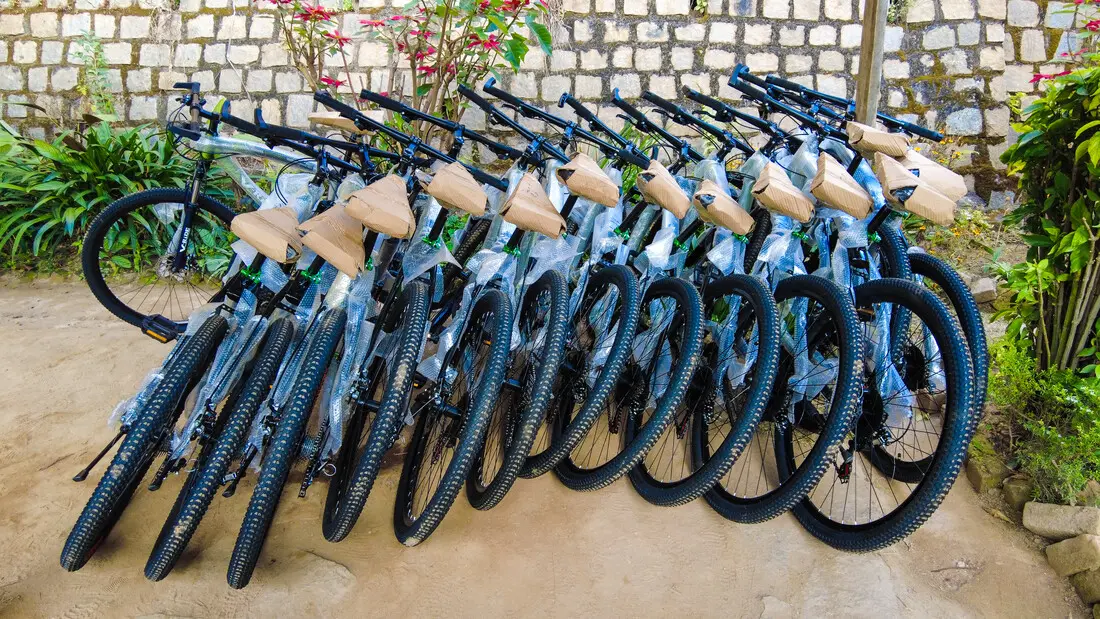
“Before, we didn’t have delivery tables. Now, we have the necessary equipment to work properly.”
For Gisèle and her colleagues, this support has transformed their daily work.
“As CSB staff, we are very satisfied because we can now save lives. Thank you very much to Medair for all this support.”
In a place where distance and poverty once cost lives, access to free healthcare is giving families new hope.
.webp)
About the TKF project:
The “Tanan-kavana ho an’ny Fahasalamana” (TKF) project reduces morbidity and excess mortality among vulnerable populations living in remote rural areas of southeastern Madagascar. Implemented by Medair in Bevaho, Mahatsinjo, Anandravy, Antokonala, and Ivato, it provides free healthcare, especially for mothers and children. The project is co-funded by the European Union and runs from May 2025 to July 2026 (HIP25).
This content was produced with resources gathered by Medair field and headquarters staff. The views expressed herein are those solely of Medair and should not be taken, in any way, to reflect the official opinion of any other organisation.
.webp)
.webp)
.webp)